

The Bridge That Came Back
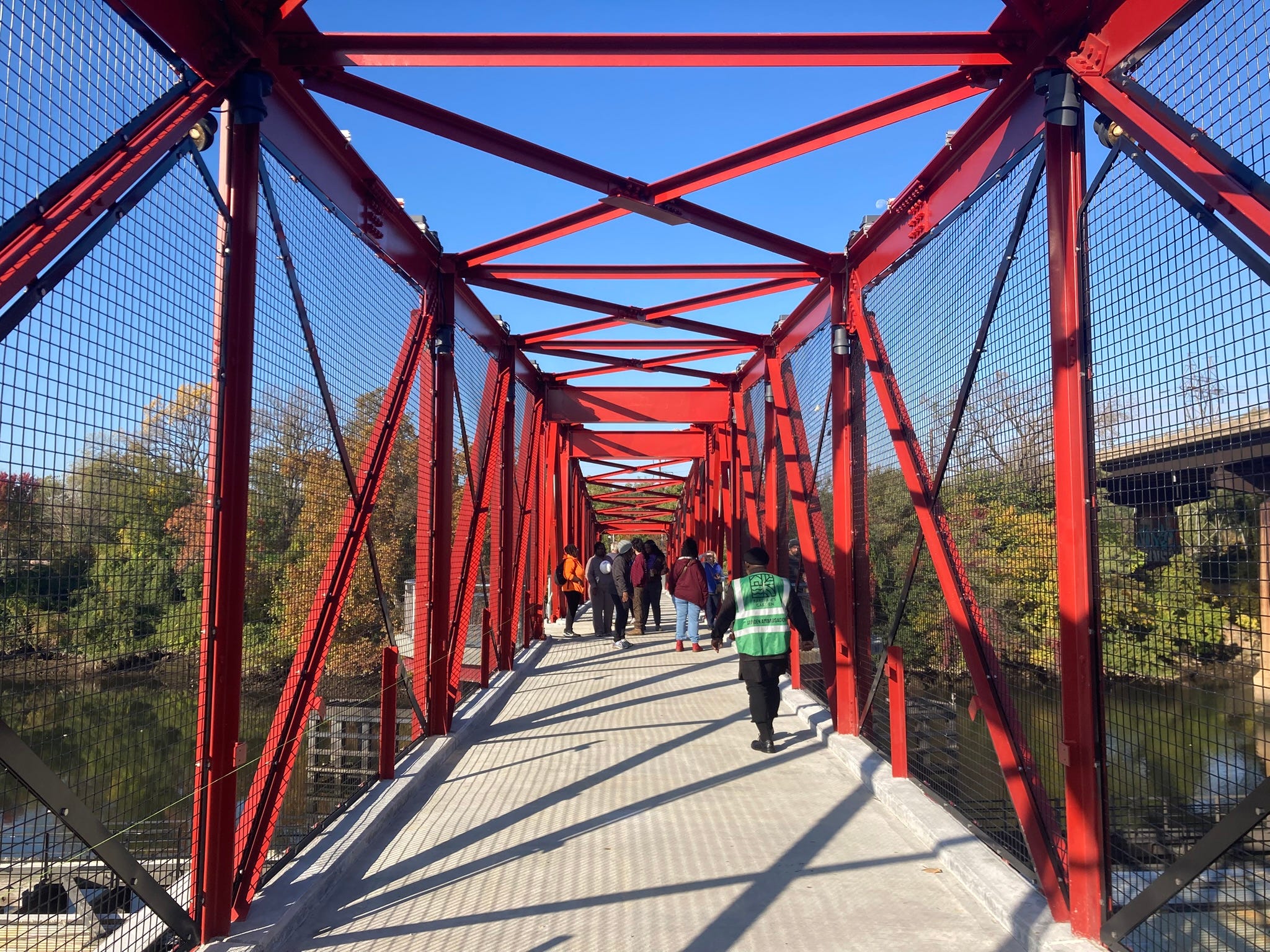
On Friday, November 13, Philadelphia officially opened Schuylkill Crossing, a new pedestrian and bicycle bridge just south of the Grays Ferry Avenue Bridge.
The red steel swing bridge connects Grays Ferry Crescent to Bartram’s Mile, creating a continuous 4.7-mile stretch of the Schuylkill Banks trail. For Fitler Square residents, that means a trip south to Bartram’s Garden without having to leave the trail.
But the history of this crossing goes back much further than the new bridge.
From Ferries to Freight Trains
People have been crossing the Schuylkill at this location since the 1600s, first by ferry, then by a series of bridges. In 1838, the Newkirk Viaduct established a permanent railroad crossing, which was replaced in 1902 by a steel swing bridge built by the American Bridge Company.
The bridge served railroad traffic for decades before Conrail abandoned the crossing in 1984, leaving the structure permanently swung open for river traffic.
More than two decades later, planners began exploring how the abandoned crossing could become part of Philadelphia’s growing recreational trail network.
In 2010, as part of the Community Design Collaborative’s INFILL PHILADELPHIA initiative, Charles Loomis Chariss McAfee Architects advocated for a crossing that would keep pedestrians and cyclists close to the water.
At the time, a much higher bridge was being considered, using the old railroad structure as its foundation. The architecture firm argued that the elevated design, with its necessary stairs and ramps, would separate people from the riverbank.
Instead, the firm pushed for an at-grade crossing, closer to the height of the original railroad bridge.
The firm described its involvement as an important turning point in the project’s early development, though years of planning and engineering still lay ahead.
A Long Road to Opening Day
The project gained momentum with a federal transportation grant in 2015 and Conrail’s donation of the abandoned bridge to the city in 2017. Construction began the following year.
Not everything went according to plan.
The project encountered pandemic-related delays, a barge collision in 2020, and wind damage to the new bridge truss that required extensive repairs. The opening was pushed back several times.
The Philadelphia Streets Department confirmed to Fitler Focus that construction cost approximately $28 million, funded through local, state, and federal sources. The final project total is still being determined, with some work continuing after the public opening.


Despite the challenges, the finished bridge incorporates significant pieces of its predecessor. The original center pier, approach supports, and portions of the structural steel were preserved and rehabilitated, while the movable truss and machinery are new.
The 225-foot center span can still rotate to accommodate larger boats. At each entrance, granite blocks etched with the names of railroad companies that once used the crossing offer another reminder of its industrial past.
More Than a New Trail
For the Schuylkill River Development Corporation (SRDC), the bridge completes a longstanding goal of connecting the Fairmount Water Works and Bartram’s Garden, two National Historic Landmarks, by a continuous off-road trail.
The new crossing also connects the larger trail network to approximately 1.5 miles of existing trails in Southwest Philadelphia.
The benefits go beyond running and cycling. SRDC pointed to improved access to fishing plazas on both banks, as well as places like Sankofa Community Farm and the educational resources at Bartram’s Garden.
The Bicycle Coalition of Greater Philadelphia, which has been conducting outreach in Southwest Philadelphia, told Fitler Focus that many residents expressed excitement about new opportunities to gather, exercise, and travel between neighborhoods.
Some longtime residents also emphasized the importance of having a voice in future trail development.
Through its Bartram’s Garden Bike Hub, the Bicycle Coalition has already been offering free cycling lessons, group rides, and bike rentals to help Southwest Philadelphia residents access the growing trail network.
As more visitors begin using the crossing, the organization says it’s important to continue creating community spaces where people feel welcomed and connected.
After more than four decades without an active crossing at this location, the bridge has a new purpose. What once carried freight trains across the Schuylkill now carries the people who live along it.
The Fitler Focus is a reader-supported publication. To receive new posts and support our work,
consider becoming a free or paid subscriber.